How to Choose the Perfect Wedding Color Palette for Your Style and Venue
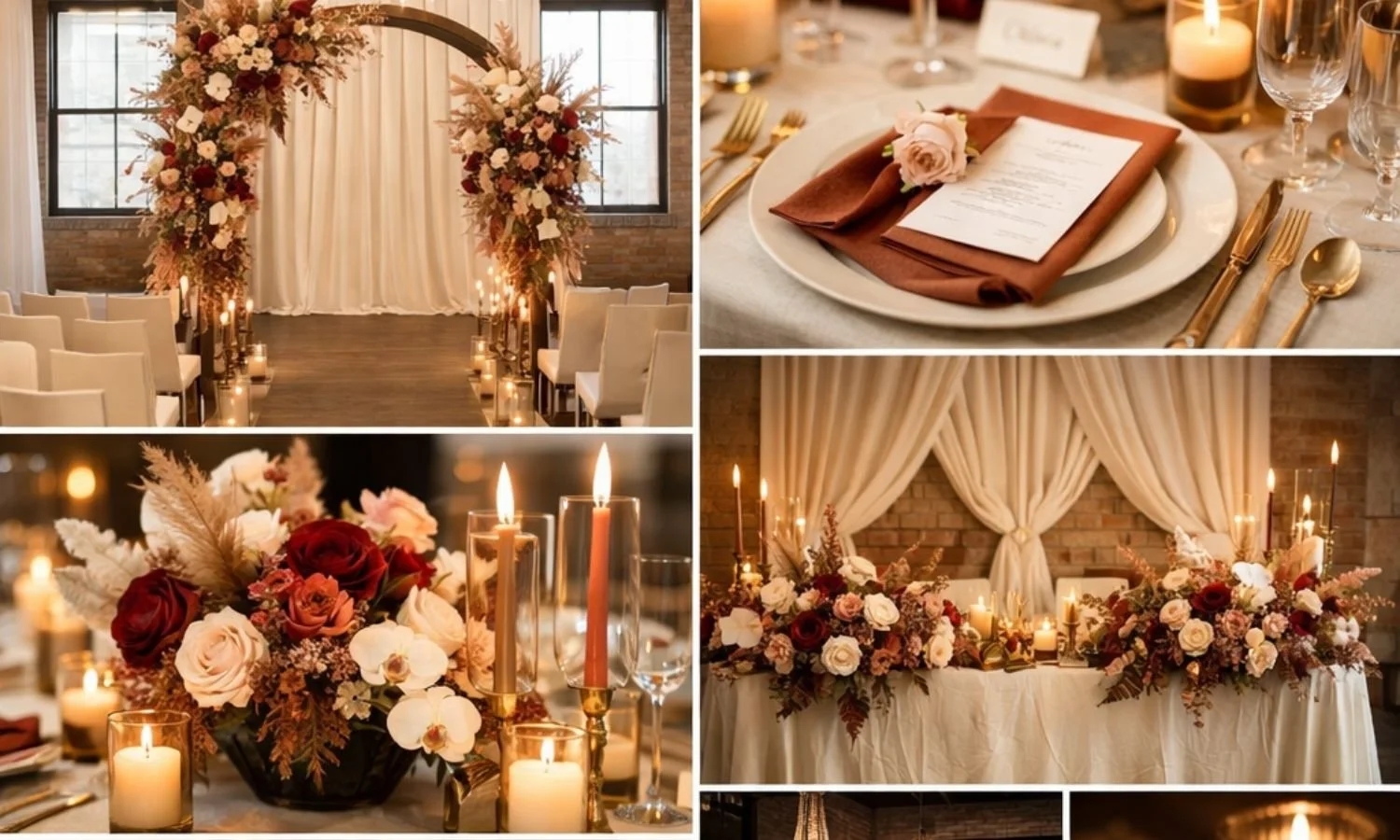
Terracotta, Burgundy, Gold, Ivory & Cream Color Palette - perfect for an Autumn Wedding
Hi lovely,
Choosing your wedding color palette is one of the most exciting moments in the whole planning process. It is also, if we are being honest, one of the most paralyzing. There are thousands of beautiful combinations out there, every Pinterest board looks different from the last, and the pressure to get it "right" can make what should be a joyful decision feel like a really stressful one.
Here is what we want you to know before we dive in: there is no wrong answer. Your palette just needs to feel like you. And the good news is that once you have a framework for thinking about it, the decision becomes much, much easier.
This guide walks you through the four things that actually matter when choosing your wedding colors, plus a visual tool at the end that lets you see your palette come together before you commit to a single purchase.
Why Your Color Palette Is the Most Important Design Decision You Will Make
Your wedding color palette is the thread that runs through everything. It connects your florals to your linens, your stationery to your bridesmaid dresses, your ceremony backdrop to your reception centerpieces. When the palette is right, your wedding feels cohesive and intentional even if no two elements are identical. When it is off, something always feels slightly mismatched, even if no one can quite put their finger on why.
Getting clear on your colors early also makes every other vendor conversation easier. Your florist, your stationer, your decorator, and your linen rental company all need a color reference to work from. A well-defined palette with specific shades gives everyone on your team the same starting point, which means fewer revisions, fewer surprises, and a final result that actually matches what you had in your head.
Step 1: Define Your Wedding Style
Start With the Feeling You Want to Create
Before you choose colors, get clear on the atmosphere you are after. Romantic and soft? Sleek and modern? Earthy and organic? Your style is the filter that makes the color decision so much easier.
Think about the weddings you have saved, the images you keep coming back to, the words you would use to describe your dream day. Are those words dramatic and moody? Light and airy? Wild and natural? Bold and celebratory? Your answers will point you toward a color family before you have looked at a single swatch.
Here are some of the most common wedding styles and the palettes that naturally belong to each one.
If your style does not fit neatly into one of these categories, that is completely fine. Most weddings blend two aesthetics. A boho garden wedding or a modern coastal celebration is just as valid as any single style, and blending palettes can actually produce some of the most interesting color stories.
Step 2: Let Your Venue Guide You
Work With Your Space, Not Against It
Your venue already has a color story. The goal is to complement it, not compete with it. A palette that fights your venue will always feel slightly off no matter how beautiful the individual elements are.
Look at the dominant tones in your venue: the flooring, the walls, the ceiling, the architecture. Warm wood tones call for earthy, organic palettes. White or neutral spaces give you the most flexibility. Richly decorated ballrooms tend to favor jewel tones and metallics that can hold their own against the grandeur of the room. Outdoor garden spaces love soft naturals and pastels that echo the landscape.
Use your venue as a canvas, not a limitation. A good color palette complements the setting without copying it. If your barn has warm wood tones everywhere, you do not have to lean all the way into terracotta. Soft ivory and dusty rose with natural greenery can feel just as at home and bring a freshness the space might be missing.
Step 3: Consider the Season
Let the Time of Year Add Natural Harmony
Seasonal colors are not a rule you have to follow, but they are a genuinely useful starting point if you feel stuck. There is a reason spring weddings so often reach for pastels and autumn weddings lean into warmth: those colors are already in the air.
Here is a quick reference by season, with the palettes that tend to feel most natural and most photogenic in each one.
That said, rules are made to be broken. A winter wedding in dusty rose and ivory is stunning. A summer wedding in deep navy and gold is unforgettable. Use the season as inspiration, not a constraint.
Visualize your wedding color palette right now
Stop guessing and start seeing. Choose your style, colors, and venue type in the Mood Board Creator and watch your palette come to life in under a minute.
Create My Free Mood BoardStep 4: Build Your Palette Around 3 to 5 Colors
Anchor, Complement, Accent
The most successful wedding palettes follow a simple three-part structure: one anchor color that carries the palette, two or three complementary tones that support it, and one or two accent shades that add depth and detail.
Start by choosing your anchor color. This is the dominant shade that will show up most consistently across your wedding: think florals, bridesmaid dresses, linens, or the ribbon on your bouquet. It should be a color you genuinely love and feel comfortable seeing everywhere on your big day.
From there, choose two complementary tones. These are the shades that live alongside your anchor color and give the palette range. If your anchor is a deep burgundy, your complements might be dusty rose and warm ivory. If your anchor is sage green, your complements might be soft cream and pale gold. Look for tones that share a similar warmth or coolness to keep the palette feeling harmonious.
Finally, pick one or two accent colors for pops of detail. Accents show up in smaller touches: candles, ribbon, stationery borders, small florals woven through arrangements. They can be bolder or more unexpected than your main palette because they appear in small doses.
Here is an example of this structure in practice.
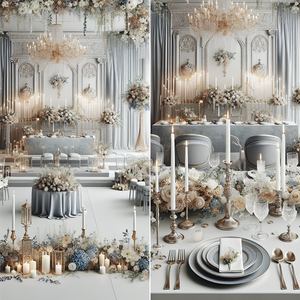
Dusty Rose, Sage, Ivory, Gold and Taupe
Romantic and timeless. Works beautifully for garden ceremonies, private estates, and spring or early summer weddings.
The One Thing That Makes All of This Easier
Reading about colors is one thing. Seeing them together on a mood board is something else entirely. A palette that sounds perfect on paper can feel flat or busy when you actually see it applied to florals, linens, and decor. And a combination you would never have thought to try on your own can look absolutely stunning once it is visualized together.
That is exactly why we built the Wedding Mood Board Creator. You choose your style, your color direction, and your venue type, and it generates a full mood board so you can see how your palette actually looks before you commit to anything. It takes about a minute and it is free to try.
Once you have a mood board you love, the Color Palette Creator lets you lock in your exact shades and download a palette card with hex codes for every color. Share it with your florist, your stationer, and your linen rental company so everyone is working from exactly the same reference. It is a small step that quietly prevents a lot of miscommunication down the line.
Frequently Asked Questions
How many colors should a wedding color palette have?
Most wedding palettes work best with 3 to 5 colors. One anchor color, two complementary tones, and one or two accent shades gives you enough range to work across every element of your wedding without the palette feeling scattered or overwhelming. Going beyond 5 colors tends to make the overall look feel busy rather than cohesive.
Should my wedding colors match my venue?
They should complement your venue, not necessarily match it. The goal is harmony, not repetition. If your venue has warm wood tones and exposed brick, a palette of terracotta and ivory will feel natural there. A palette of icy blue and silver would feel at odds. Think of your venue as the backdrop and your palette as the layers you add on top of it.
What is the most popular wedding color palette right now?
Sage green with soft ivory and warm neutrals has been one of the most consistently popular wedding palettes for the past few years and shows no signs of slowing down. Blush and champagne remains perennially beloved. For 2026 and 2027, deeper palettes are trending strongly: moody mauve with copper, midnight blue with silver, and chocolate brown with ivory are all seeing a significant rise. You can browse the full list of trending combinations in the 2026 wedding color palettes guide.
Can I have two anchor colors in my wedding palette?
Yes, many of the most beautiful wedding palettes are built around two equally strong anchor colors rather than one dominant shade. The key is making sure the two anchors share a similar undertone (both warm or both cool) so they feel like they belong together. Sage green and dusty rose is a classic example of two anchors that work beautifully side by side.
How do I communicate my wedding colors to vendors?
The most effective approach is a downloadable color palette card with hex codes for every shade. Hex codes remove all ambiguity: "dusty rose" can mean dozens of different things, but #C4929A means exactly one color. The Color Palette Creator at WeddingDecor.com generates a palette card you can share directly with every vendor on your team.
What if I can not decide between two color palettes?
Create a mood board for each one and see them side by side. What looks beautiful in your head often surprises you once it is visualized in context with florals, linens, and decor. The Wedding Mood Board Creator includes 2 free boards, so you can build both options and compare them before committing to either one.
Ready to see your palette come to life?
Choose your style, colors, and venue in the Mood Board Creator and watch your wedding vision take shape in under a minute.
Create My Free Mood Board