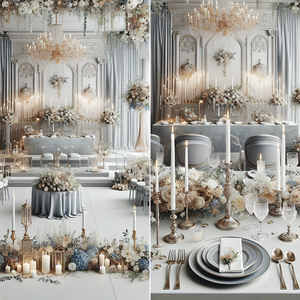
Choosing garden wedding colors starts with the space itself. The flowers, trees, paving and furniture already give you a backdrop to work with. A palette helps you decide what to bring into that setting, from the table linens to the flowers you carry.
These 12 garden wedding color palettes cover soft pinks, greens and blues as well as warmer terracotta and deeper burgundy. Each includes color swatches, styling ideas and suggested settings. Use them as a starting point, then adjust the shades to suit your venue and the time of year.
Have a color in mind?
Explore combinations with our free Wedding Color Palette Creator, then save a palette to share with your florist or decorator.
12 Garden Wedding Color Palettes Worth Considering
Picture these colors against your venue before choosing a favorite. The same palette can feel quite different on a shaded lawn, in a sunny courtyard or inside a greenhouse.
Blush Pink Garden Romantic
Blush is an easy starting point if you love a romantic garden wedding. Try pale pink flowers against warm ivory linens, with a few dusty mauve blooms to give the arrangements depth. Garden roses and loose ribbon suit this look; you can keep the rest of the table quite simple.
The deeper rose tones in this palette give pale blush something to sit against. Use blush across the larger areas, then bring mauve into napkins, ribbon or a few flowers. It is a lovely combination for a rose garden or a venue with aged stone and warm wood.
Perfect for: Heritage Garden · Manor House · Rose Garden · Estate Venue
Sage Green Garden
Sage sits comfortably alongside garden foliage. Warm ivory linens and natural wood chairs help keep the setting light, while a little terracotta adds warmth if you want an accent. Check a fabric sample against the greenery at your venue: some sage shades look much grayer outdoors.
Perfect for: Vineyard · Outdoor Ceremony · Farm or Barn · Wooded Garden
Try it free
Build your palette in minutes
Our free Wedding Color Palette Creator lets you mix and match shades, then download a palette card to hand straight to your florist or decorator.
Dusty blue works well when you want a little color across the tables without a strong contrast. Pair blue napkins with ivory linens, clear glass and loose white flowers. If your venue has lots of cool stone or blue-gray paving, add a warm neutral to soften the overall effect.
Lavender gives you room to use several soft purple shades together. Keep the linens warm white and let lilac, pale purple flowers and sage foliage carry the color. Ask your florist which flowers will be available locally for your date, especially if you have your heart set on lilac or fresh lavender.
Terracotta and rust suit gardens with warm stone, clay pots or timber. Use the deeper rust in smaller details, with cream linens and sage foliage around it. Woven textures and amber glass add warmth without needing to repeat the same orange tone everywhere.
Once you have a palette direction, our free Mood Board Creator helps you see how everything pulls together with decor, florals, and styling choices in one beautiful visual.
A white and green palette gives you a good reason to pay attention to texture. Mix leafy foliage with white flowers of different shapes, then use linen and simple glassware across the tables. If the garden is already full of flowers, this is an easy way to let those existing colors stay part of the setting.
Peach and coral bring warmth to a summer garden. Try peach flowers as the main color, a few stronger coral blooms, and cream linens underneath. Rattan or woven details suit the palette well. Let your florist suggest flowers that can hold up in the conditions at your venue.
Burgundy gives blush a deeper backdrop, especially for a late summer or fall garden wedding. A few burgundy flowers among pale pink arrangements can be enough. If you choose burgundy linens too, keep the flowers and other table details lighter so the tables still feel balanced.
Perfect for: Winery · Rose Garden · Manor House · Heritage Venue
The palettes that work best in garden settings share one thing in common: they let the natural surroundings breathe. Choose colors that complement your landscape rather than compete with it, and you will almost always end up with something beautiful.
Navy & White
Navy can look quite strong outdoors, so decide where you want that contrast. Navy napkins on warm white linens give a lighter result than full navy tablecloths. Wicker, greenery and loose flowers help connect the palette to a garden or lakeside setting.
Champagne and ivory work through small differences in shade and texture. Try ivory flowers, champagne napkins and a little antique gold in the table details. Look at linen samples together before ordering: a yellow-toned champagne and a cool white can feel quite different side by side.
For a meadow look, bring together soft pink, butter yellow, green, blue and lilac. You can use several colors in the flowers while keeping linens and stationery simple. Repeat a few of the same flower varieties across the arrangements so the mix feels connected.
Blush, sage green, dusty blue, lavender, terracotta and champagne are all options to consider. Start with the colors already at your venue. If the garden has plenty of flowering plants, you may want quiet linens and a smaller range of accent colors.
How do I choose a color palette for an outdoor garden wedding?
Look at the landscape, paving, furniture and existing flowers. Choose a main color, then add supporting shades that sit comfortably with that backdrop. Use the free Wedding Color Palette Creator to explore combinations and save a palette to share with your vendors.
What colors work well for a spring garden wedding?
Blush, lavender, pale blue, peach and soft green are good starting points. You can also use a stronger shade in smaller details, such as blue napkins or deeper pink flowers. Our spring wedding colors guide has more combinations to explore.
Can I use several colors in my garden wedding decor?
Yes. Choose where each color will appear before you commit to linens and flowers. You might use ivory across the tables, blush in most of the flowers and mauve in a few smaller details. For a wildflower palette, keep the linens simple and let the flowers hold the wider mix of colors.
What decor should I prioritize for a garden wedding?
Start with the places guests will spend time looking: the ceremony setting and the reception tables. Your venue may already provide a beautiful ceremony backdrop, leaving more of your budget for linens and flowers. If the reception continues after dark, plan the lighting early with your venue.
How can I see my garden wedding colors together?
Use the Wedding Mood Board Creator to explore your colors alongside flowers and decor in one visual. If you have a photo of your venue, the Wedding Design Studio can help you explore how a design could look in that space.
Is sage green a good choice for a garden wedding?
Sage works well with many garden settings because it relates to the surrounding foliage. Pair it with ivory for a soft look, blush for a little warmth or terracotta for an earthy accent. Compare fabric samples with your venue photos to find a shade that suits the space.
How can I use your free tools to plan my garden wedding palette?
Start with the Wedding Color Palette Creator to refine your shades. Then use the Wedding Mood Board Creator to explore a styled direction. The mood board creator includes two free boards delivered by email, with no account or credit card needed.
WeddingDecor.com was built on the belief that a beautifully designed wedding should not require a massive budget or a team of stylists. Color is almost always where it starts, and getting that right makes every other decision easier. We hope this guide helps you find a direction that genuinely feels like you.
Ready to start?
Your perfect palette is just a few clicks away
Our free Wedding Color Palette Creator lets you explore combinations and download a shareable palette card, then bring it to life with a custom mood board.